
Why the exposure triangle matters
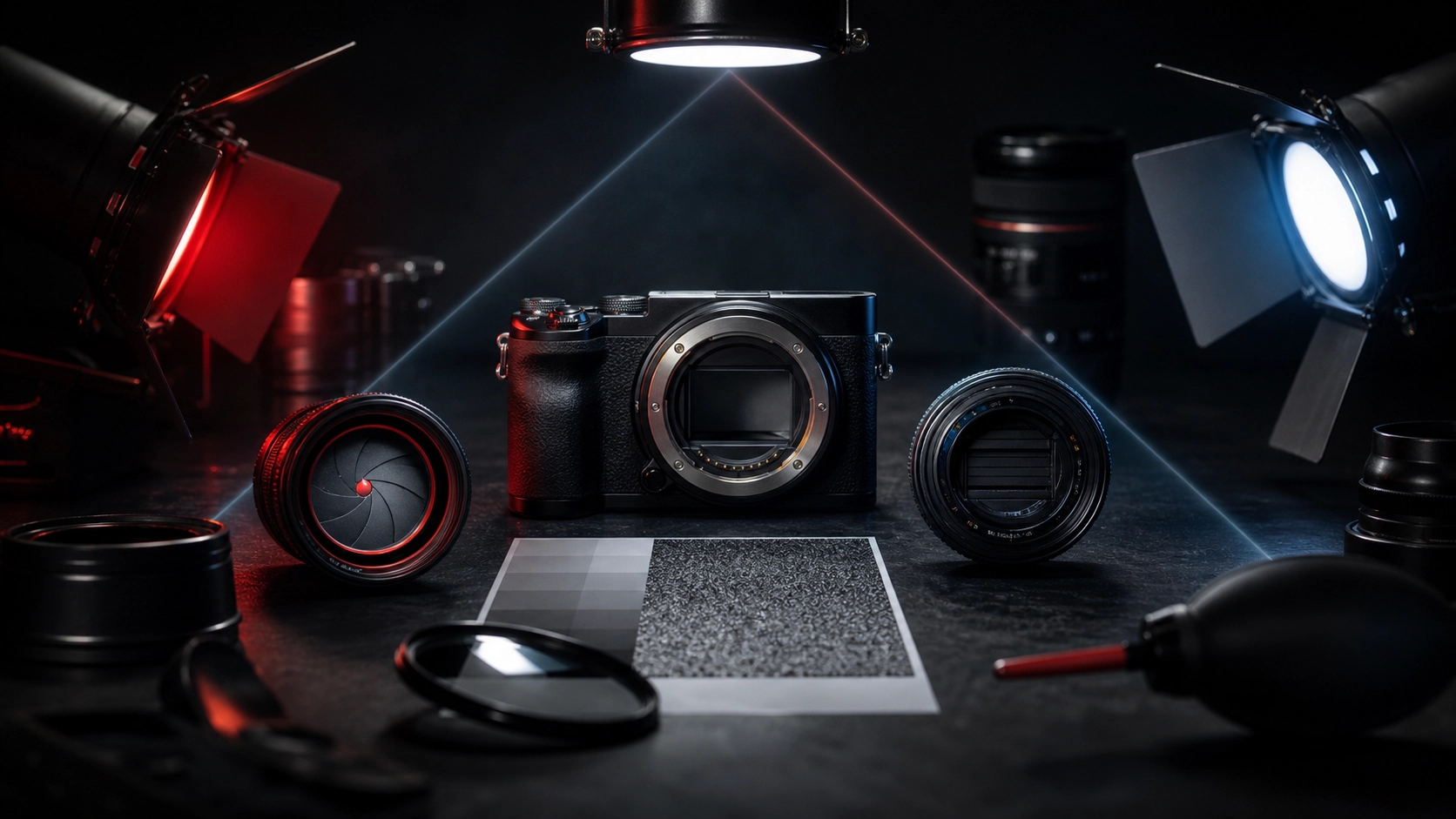
Exposure is not one setting. It is a balance between aperture, shutter speed, and ISO. Each choice changes brightness, but each one also changes the character of the frame.
Once you understand that tradeoff, manual exposure stops feeling like guesswork and starts becoming a creative decision.
Aperture: depth and light
A wide aperture such as f/1.8 lets in more light and creates shallow depth of field. It is useful for isolating a subject, softening a busy background, and building a more intimate image.
A narrow aperture such as f/8 or f/11 lets in less light but keeps more of the scene sharp. Use it when the environment, costume, set, or production design needs to stay readable.
Shutter speed: motion and tension
Shutter speed controls how motion is rendered. A fast shutter freezes action, fabric, hair, rain, and hand movement. A slow shutter lets motion smear into the frame and can make a still image feel cinematic.
- Use faster speeds when the subject or camera is moving.
- Use slower speeds when blur is part of the mood.
- Brace the camera or use support when the shutter gets slow.
ISO: sensitivity and texture
ISO raises the sensor signal when there is not enough light. Higher ISO can save a shot, but it also increases noise and reduces tonal flexibility. In low-light scenes, raise ISO only after aperture and shutter speed have been chosen for the look you want.
A practical shooting order
Start with the creative decision, not the meter. If depth matters most, choose aperture first. If motion matters most, choose shutter speed first. Then adjust the remaining settings until the exposure lands where the story needs it.
The exposure triangle is not a formula. It is a conversation between light, time, and texture.
Quick field checklist
- Pick the visual priority: depth, motion, or cleanliness.
- Set aperture for depth of field.
- Set shutter speed for motion control.
- Raise ISO only as much as the scene requires.
- Review highlights, shadows, and skin tones before moving on.